What Actually Happens in a Mobile Caravan Service
Most people picture a workshop when they hear "caravan service": you hitch up, tow the van across town, leave it for a day or two, and hope the quote at the end resembles the one at the start.
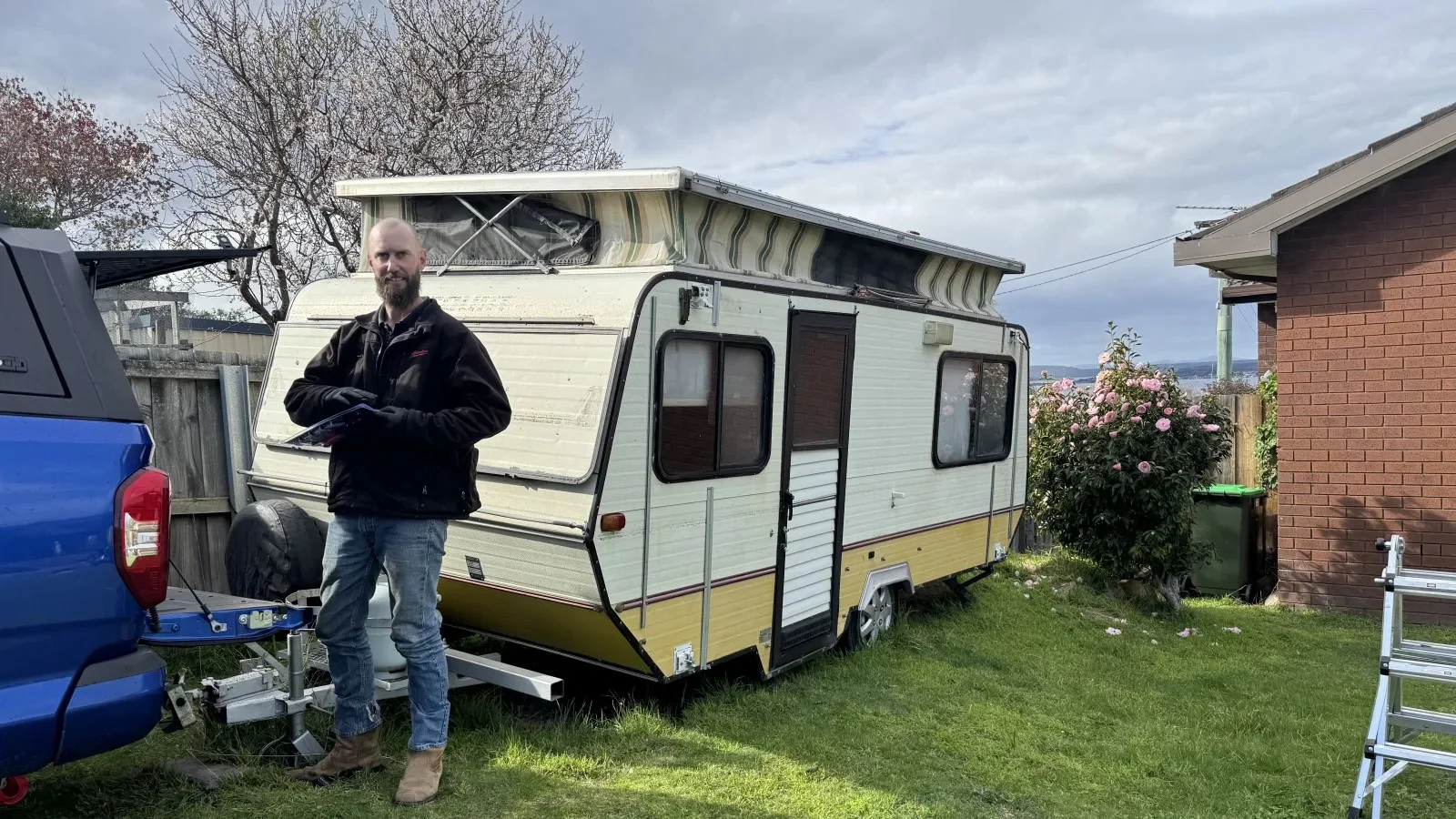
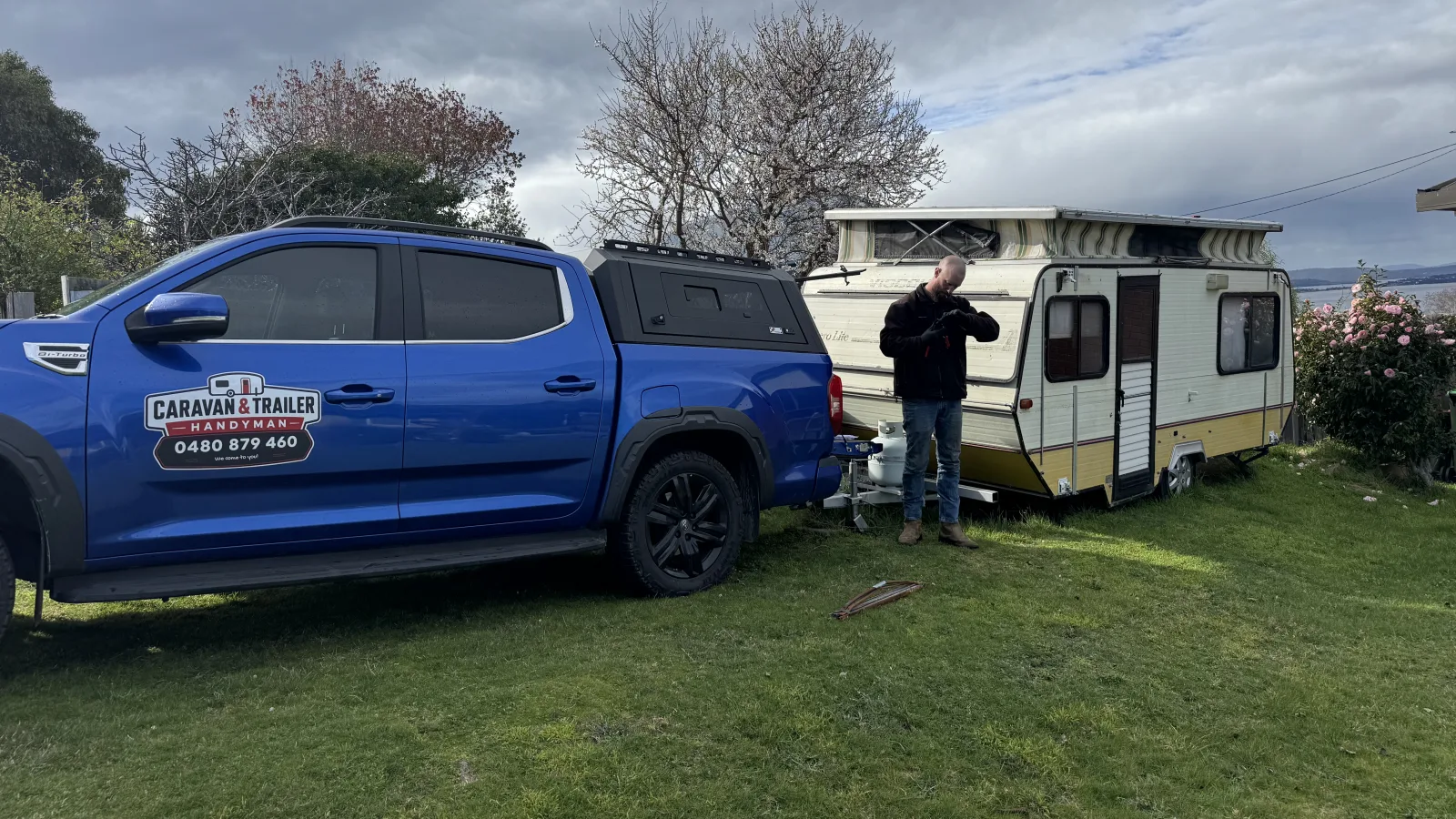
Mobile is a different arrangement. The van stays where it is, whether that is your driveway, a storage yard, a farm shed or a campsite, and the workshop turns up on the back of a ute. For a lot of vans in Greater Hobart that is the difference between getting serviced and being put off another season, because plenty of the vans that most need attention are the ones nobody wants to tow anywhere.
This is what the job actually involves, start to finish, so you know what you are booking before you book it.
1. What gets checked
A full annual caravan service works through a fixed checklist, and you get the completed version of it at the end. It starts at the front of the van: coupling condition, coupling bolts, safety chains, shackles and handbrake operation.
Then the running gear, which is the part that puts you on the side of the road. The wheels come off. Bearings are cleaned and inspected, repacked with grease, and wheel seals are replaced as a matter of course rather than only when they are already leaking. Studs get checked, then the nuts go back on torqued to specification and the figure used is written down. On the last van I did that was 135Nm.
With the wheels off, the brakes, bearings and suspension are all accessible at once: brake magnets, shoes and drums inspected and adjusted, breakaway system tested where one is fitted, then springs, shock absorbers, U-bolts and bushings, and the chassis itself looked over for rust and cracking. Tyres get condition, tread depth in millimetres, pressures set, and the spare inspected too.
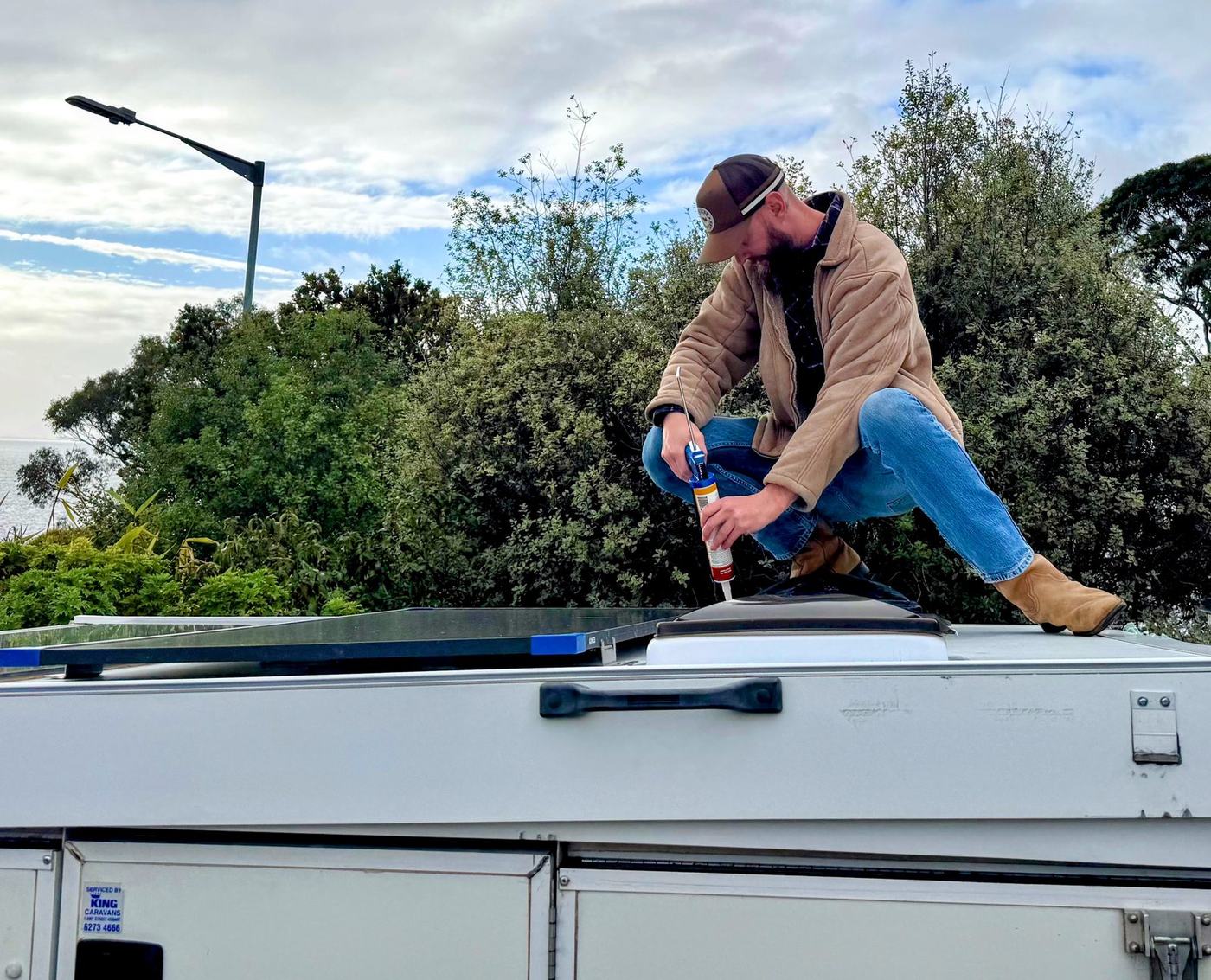
The rest is electrical, gas and sealing. Trailer plug and lights tested properly, tail, brake and indicators. Battery voltage recorded, and the solar system checked if the van has one. Gas hose and regulator inspected and a leak test completed. Roof seals, window seals and hatches inspected, along with any sign of water ingress, and a moisture reading taken if there is reason to. Smoke alarm and fire extinguisher get a look as well.
2. How long it takes
A standard annual service on a single-axle van runs two to four hours. Tandem axles take longer, mostly because there is twice as much running gear to pull apart.
What blows that out is corrosion. A van that has spent winters near the coast without a rinse will have seized fittings and rusted fasteners, and there is no fast way through that. If something is going to add an hour, it is almost always a bolt that does not want to move.
I would rather tell you that up front than discover it at hour three, so if the van has been standing a while, say so when you book and I will allow for it.
3. What we need on site
Not much, but the four things that matter. Level, firm ground: grass is fine, soft mud is not, because the van has to come off the ground safely on jack stands.
A metre or so of clear space down at least one side, plus access to the drawbar. If the van is wedged between a fence and a shed, the wheels cannot come off.
A power point if you have one handy. Not essential, I carry my own power, but it saves time. And a tap, because testing a water system without water is guesswork.
You do not need to be home for the whole thing, but I do need to reach you by phone in case something turns up that changes the scope.
4. What a driveway genuinely cannot do
This is the honest limit of mobile work, and it is better said plainly. Anything needing a hoist is out. Major structural repair, chassis straightening and full delamination jobs are workshop work, and a driveway is the wrong place to start pulling a van apart with weather coming. Big panel and paint jobs are the same story.
What does work well on site is the servicing, the diagnostics and the great majority of mobile caravan repairs: leaks, wiring, brakes, bearings, pumps, appliances, seals, ovens, water heaters.
If I find something during a service that genuinely needs a workshop, you will get told that rather than sold a patch job, along with a straight opinion on whether it is worth doing at all.
5. What you get at the end
A written report, which is the part most people find useful months later. Every line of the checklist above with its result against it, the torque figure used, tread depth, battery voltage, plus parts used, any repairs required, recommended future maintenance, the overall condition of the van, and when the next service is due.
If follow-up work is needed, that comes as a quote you can sit on. There is no callout fee, and the quote is free, so a service that turns up bad news does not cost you extra to find out about.
6. When to book one
The report sets the next one at 10,000km or twelve months, whichever lands first. Bearings do not care how far you have towed if the van has sat through two wet winters, so the date matters as much as the odometer.
Beyond the calendar, the three worth booking around are: before a big trip, after buying a used van, and before the van goes into storage for winter. That last one is its own job, and the pre-winter checklist covers what to work through if you would rather do it yourself.
I cover Greater Hobart, so from Kingston and the Channel through to Richmond and the Coal River Valley is all normal ground.
A mobile service is not a compromised version of the workshop job. For everything short of structural work it is the same inspection, the same parts and the same standards, done where the van already lives, which for most people is the only reason it gets done at all.
If the van is due, or you genuinely cannot remember the last time the bearings were touched, give me a call and we will sort out a time. I come to you anywhere in Greater Hobart, there is no callout fee, and the quote is free.