Spring Caravan Recommissioning: Getting Your Van Ready After Tasmanian Winter
A Tasmanian winter parked over a van is not gentle. Frost works seals, salt eats metal, damp seeps into walls, and a battery that sat flat for four months does not come back fully. Vans that were fine in May need a proper look before they go anywhere in September.
The good news is that most of the damage catches itself early if you know what to look for. This is the six-point walk-around that gets a van from winter storage to trip-ready, and most of it you can do yourself in a morning.
1. Roof seals and water ingress - check now, not after the leak
Winter rain finds every crack. If sealant lifted or cracked during the cold months, water has had months to seep into the timber frame. By spring you might not see it yet, but the damage is already happening inside the walls.
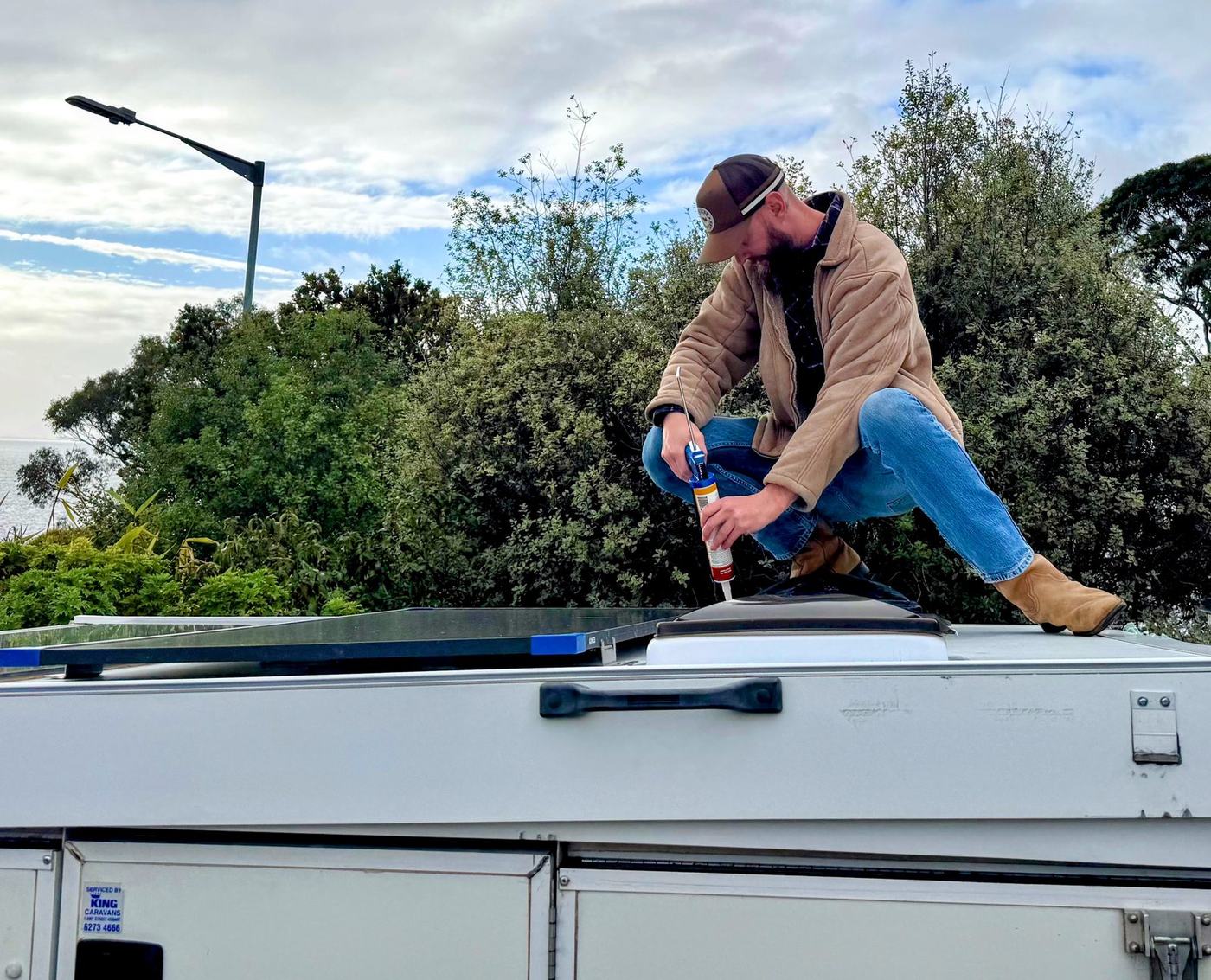
Walk the roof and check every seam, hatch, skylight and aerial. Press on any sealant that looks chalky or cracked. If it flexes instead of being solid, it needs to come off and be resealed properly. Do not just smear over the top - that traps moisture underneath and makes it worse.
If you find soft spots in the roof or you can already smell dampness inside, book a leak detection before you tow anywhere. Finding the source takes proper equipment and time, and it is worth doing right.
2. Wheel bearings - moisture and corrosion after sitting wet
Bearings that sat through four wet months can pick up moisture through worn seals, especially on vans stored outside near the coast. You will not feel it until you are at 100km/h on the Midland Highway and a bearing starts making noise.
If it has been more than 12 months or 10,000-15,000km since the last bearing service, do it now before any spring trips. While the wheels are off, have the brakes inspected at the same time - electric brake magnets corrode over winter on vans parked outside, and seized shoes or stuck adjusters will cost you more later if they jam on a slope.
3. 12V battery and solar - the silent drain
A deep-cycle battery sitting with a fridge or alarm draw will flatten over winter. Once lead-acid or AGM drops below 50% charge for weeks on end, it never fully recovers. A 'dead' battery after winter usually means a new one.
If the van has a battery, either disconnect it completely for storage, or put it on a smart trickle charger. If you rely on solar over winter, clean the panels now. A shaded panel in July provides almost nothing, and grime makes it worse. Check the regulator is actually charging - a multimeter on the battery should show a slow charge in daylight.
4. Tyres, flat spots and handbrake seize
Vans that sit on the same spot all winter get flat spots where the tyre is compressed against concrete, plus sidewall cracking from the cold. Move the van a half-turn every few weeks if it is staying parked, or chock the wheels to take the load off completely.
Do not leave the handbrake fully applied for months. Shoes and drums can seize solid over winter, especially if there is salt or moisture in the air. Release the handbrake fully and chock the wheels if the van is on level ground and parked long-term.
5. Undercarriage, chassis and corrosion
If the van was anywhere near salt water - Bruny Island, the East Coast, or down the Channel - the underside is coated in salt. Left over winter it rusts the chassis, brake lines and safety chains. Spring is when the damage becomes obvious.
Give the underbody a proper fresh-water rinse first, then walk the chassis rails, drawbar, shackle pins and welds. Surface rust in September is a wire brush and paint. Ignored through spring it becomes a repair. If you spot anything that looks structural or the paint has bubbled through, have it looked at.
6. Gas and water systems - test before you need them
Gas bottles, regulators and hoses get eaten by coastal air. Check for rust, perishing rubber or loose connections - a soapy-water test on the fittings takes two minutes. Turn the bottles off at the tap while the van is stored and leave them off until you are ready to use them.
The water system has sat unused for months. Fill the tank and run water through the system to flush it, then check the pump works, the fittings have not come loose and there are no drips or seeping seals. A dribble now is easier to fix than a wet cabinet on the way to Bruny.
None of this is complicated, but working through the six points before you take the van anywhere is what separates a van that runs all season from one that breaks down at the worst time.
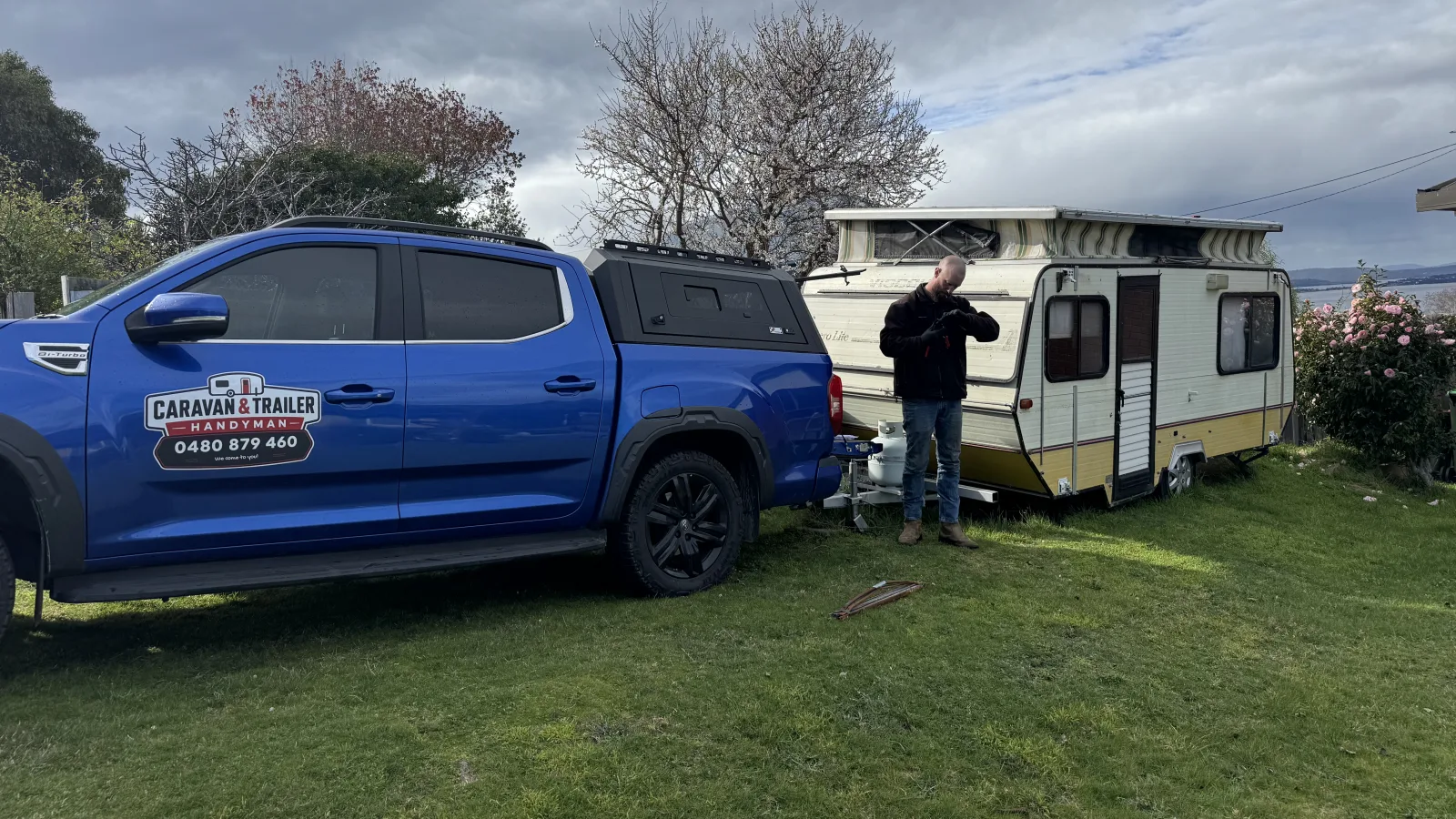
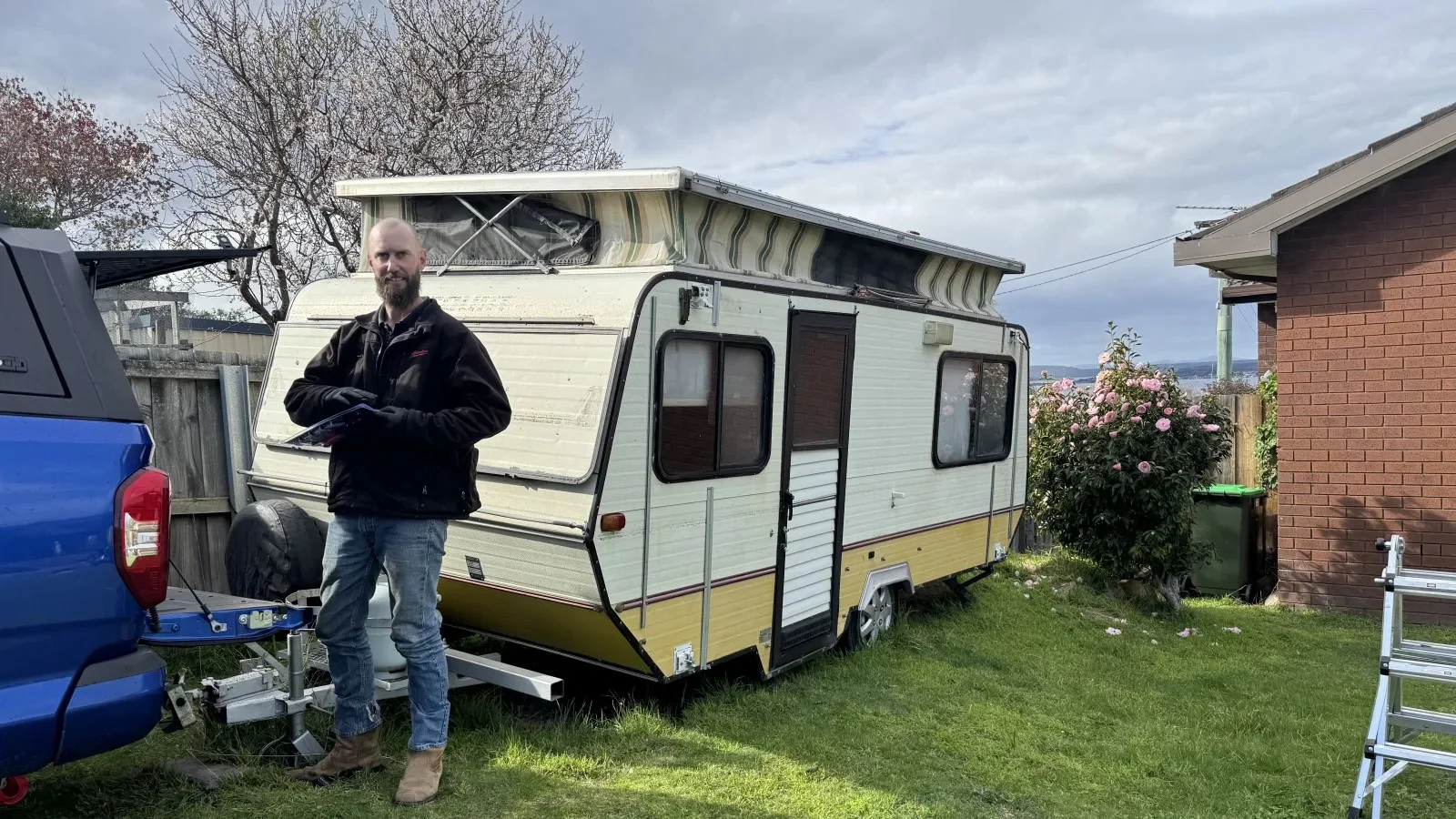
If you would rather not climb on the roof or spend a morning under the van, we do the spring recommissioning check. We come to Kingston, Howrah, Bellerive and right across Greater Hobart, work through the lot, and hand you a written report with what needs doing and when. There is no callout fee and the quote is free, so you know exactly what you are up against before you commit to any work.